HOW TO START AND GROW A PROFITABLE PODCAST WITH PODCASTING PRINCESS HALA TAHA OF YOUNG AND PROFITING: Transcript – Episode 77 of Creative Counse;
Brittany Ratelle: Welcome everyone back to the podcast and I am so honored to have with us Hala, welcome to creative counsel!
Hala Taha: Brittany. I’m super happy to be here. Thanks for having me.
Brittany Ratelle: You’re welcome. This is really humbling , because if you guys have heard Hala’s an amazing podcaster and pocaster interviewer in her own right. And she’s honed her skills over 11 years. It’s a little intimidating to be on this side of the mic with you, but I would love for people to understand the reader’s digest version of your story, because I think you’ve got a creative and really an incredible tale of resiliency and where you started in radio in the background, and then what you’re doing today with Young and Profiting.
Hala Taha: I’ll try to give the five minute version or less because there was lots of ups and downs. So I started, I think a good point to start is like you mentioned my first real job, which was an internship at Hot97. This was the first job that I had that wasn’t like, retail sales person at the mall.
And so I got this internship. I was 19 years old and I did a great job and I ended up getting promoted to be Angie Martinez ‘s assistant. So for those of you who are not from New York, she’s the number one personality. She was the voice of New York and she had the Angie Martinez show, which was the biggest show in America on the radio.
And so I was the assistant producer, 19 years old meeting every celebrity you can think of, especially in the hip hop world, J Lo, Diddy, Kanye, West Kim Kardashian, you name it. I literally met everyone and I was the head of all the interns . So, I was an unpaid intern for three years, but I was managing all the interns and I was, basically, the assistant producer.
It’s just that the way that it works in radio is that you have to pay your dues. And most of the personalities that you hear actually worked for free for five to seven years before they actually got a show. And so I worked for free. I ended up dropping out of school for a year and a half. My undergrad, my parents were very mad at me but I was following my dreams.
I wanted to use my voice to make an impact on the world. I actually thought I was going to be a famous singer. And that’s why I originally applied to radio station internships to push my music –quickly realized I couldn’t compete with Beyonce. And so I decided I have a chance to be the next Angie Martinez. I’m going to go down that path instead.
And I honed my on -air personality skills. I had online radio shows on the side, which were precursors to podcast, and really that was interviewing music artists like Soldier Boy and Chris Brown and Fabulous, and was just doing that at like 20 years old. I had shows with the up and coming DJs.
And three years into Hot97, I was getting a lot of pressure from my parents. All my siblings are doctors and I was like, I need a job. I need to actually start getting paid. I was making money at night, going to going to shows with the DJs, selling underground showcase tickets and doing things that you shouldn’t be doing at 20 years old.
Brittany Ratelle: You were hustling,
[00:02:40] Hala Taha: I was hustling, but it was not the right place to be as a young woman, especially I’m like so petite and things like that. I got in a little bit of trouble. And so I was like, I just want a real job. And so I, I approached the station and the HR director and I was rejected.
I was actually fired from this free job after hustling for three years. And they were the ones that asked me to go in there every day. And I quit college for them they still fired me. I gave everything up and so I was absolutely devastated. My whole identity was wrapped in Hot97.
All of my screen names on Twitter and was Hala Hot97. All my friends knew me from that. So I felt like somebody had died. It was like one of the worst moments in my life, but I don’t stay down for long, I’m really used to rejection, especially growing up in 9-11 and in high school, not getting many opportunities.
I was really used to getting back up on my feet. And so I got fired on a Thursday — by Sunday, I had a new idea– to launch the sorority of hip hop, strawberryblunt.com. And I had some blogging experience. I had been blogging for some of the DJs on the side. And so, I decided that I was going to launch this platform and find other girls in the hip hop industry that were not getting attention and that we’d band together and together we would be more powerful and have a platform.
Got fired on Thursday, by Sunday I was learning how to create WordPress websites and going on Craigslist and Twitter and trying to recruit girls. And two weeks later, I had 14 girls and had my first like board meeting and I was the president of the sorority of hip hop. Three months later, we were one of the most popular hip hop and entertainment sites in the world.
I basically figured out how to hack Twitter. And we got noticed by MTV, shot a pilot with us. And we were like, all. What’s going to like we didn’t get anything, nothing came out of it, but I was like what’s going to happen six months from now. We’re just three months in. So we kept hustling.
We, we had online radio shows, like I mentioned, that was the precursor of podcasts. We had this blog, we hosted parties and then MTV reached out to us again. And this was about two and a half, three years into it. They filmed us all summer. It was official. We signed paperwork. I was getting paid three times as much as all the other girls that were included in the show, they got us a studio on Broadway.
They hooked it up. They filmed us everywhere at my mom’s house on the street, had my makeup and hair done. I thought I made it. I thought it was going to be the next Snooky and. At that point Jersey store had just ended. And it was like huge. This was like 2013. MTV was like the place to be. And so I was like, finally, I made it, didn’t make on Hot97 I worked with strawberry blunt.
We got noticed. Now I’m going to be this MTV superstar, but didn’t work out that way. Two weeks before they were supposed to launch the show, the producer called me up and she’s Hala, I’m sorry. They, everybody decided to go in a different direction. We’re not going to air the show.
Brittany Ratelle: We’re canning it.
[00:05:17] Hala Taha: And, they pulled the plug. And again, I was. Down to zero. I was devastated. I was like, I can’t believe I did another three years. And this happened again. And I just, I had a mindset previously that life was limitless. I could do anything. I can create my own reality. And that’s why as such a young girl, I did incredible things, but that totally killed my mindset.
And I was like, forget it. I’m shutting this down. We’re never going to make it. I want to be normal. I want to make my parents happy. I went, got my MBA, went into corporate and for four years was just this normal person. I had a great corporate career, but I just never thought I would do anything else. And that I was just going to be this normal person in marketing and just work my way up in corporate and forget about entertainment.
Four years into my corporate career at Hewlett Packard, I didn’t get an opportunity that I wanted. I’m not going to go into the details because it’s not important. But essentially, I decided that I was going to start my own thing. And I was going go back to my original passions and create Young and Profiting Podcast.
And here I am four and a half years later, number one podcast in self-improvement across all apps interviewed people like Matthew McConaughey, Seth Godin, have social media and podcast agency with 60 employees, became a full-time entrepreneur, have a podcast network that just got signed to Westwood One.
And so, everything is going amazing. And, I’m so happy that I went back to my roots and I didn’t tell myself I was too old or it was too late and I just went for it because that was the right thing for me, it was the right timing. And sometimes it’s about the right timing.
[00:06:43] Brittany Ratelle: Like you said, marrying that to your -skills and going back, I love that part of your story of you overcoming and being introspective on what is it that’s my niche and my zone of genius that I can add to the way the market has changed, because reality TV has changed and radio has changed. And what you would put your hat on before– that’s not the way the landscape looked, years later.
[00:07:04] Hala Taha: 100%. And I felt like I had evolved as a person. I didn’t want to do something that was meaningless.
I feel like YAP took off because I had very pure intentions. I didn’t think I was going to make any money. I did it as a hobby and my goal was to really help young professionals level up in their lives because I was a failed entrepreneur. I was late to corporate. I was a failure in everyone’s eyes. And then all of a sudden I started making six figures in corporate and I was also like an in-trepreneur within the company, because I had all this entrepreneurship experience and I was like — “Hey, I have a message to share.”
I feel like I’ve got the skills to put out this podcast and that these guests will believe in me because of all the other things that I’ve done in my life. I decided to just put it all together and put something very positive out to the world with pure intentions and it was magnetic.
[00:07:48] Brittany Ratelle: That’s awesome. And I’m sure people could feel that energy and be like, she just really wants to give back. And I’m sure because you were already so experienced in radio, obviously those skills are translatable that you knew how to put together a great show and great content and to be a good interviewer, to make sure that there was going to be something of value –and that’s why the listener would want to turn in again and again.
[00:08:09] Hala Taha: Exactly. And that’s why we have a really unique story because we had volunteers from the beginning. So Timothy tan, which you know well, because you actually do legal work for us. He’s my business partner. He owns 10% of everything. He was a volunteer who signed on episode two, he was a super fan that was just so hooked on the podcast. He was a super smart kid, much younger than me. And he was like, “Hey, Hala, like I know you went to the same college as me. I don’t know anybody else who’s doing anything like this. I just want to help, how can I help?” And so he started out with helping me with graphics and creating my logo.
And then now he’s doing all my finance, all my legal and he like totally grew into this whole other role. By episode eight, I had 10 volunteers in a slack channel and so one guy would work on my website, one guy would work on my videos, and it was all just because they aligned to the mission.
None of us were making money, including myself. And they saw how hard I worked and how much skills I had. And they just wanted to learn from me. And it just really helped accelerate the success of the show.
[00:09:05] Brittany Ratelle: That’s incredible. On, on that respect, what would you say to someone, because I think from your experience, you’ve been on both side of the coin. Now you’ve been the volunteer who maybe worked and maybe did get a little bit taken advantage of, and now you’ve also been the person who’s the manager who’s reaping the rewards of someone who’s just so aligned. What would you say to someone of ” Hey, I have this opportunity, but it is unpaid.” Like how should I judge whether it’s worth it, especially as a creative.
[00:09:29] Hala Taha: I love this question, Brittany, you’re really talented as a host, so you have nothing to be worried about. I get interviewed all the time and you’re doing a great job.
[00:09:36] Brittany Ratelle: Thanks!
[00:09:36] Hala Taha: So in terms of working for free, I always give this advice. I don’t regret Hot97 for one minute.
I feel like so much of the success that I’m going through right now is because of what I learned at the station. I learned how to be an on- air personality. I learned how to put together a show brief. I learned how to do research. I learned how to, sell because I was selling showcase tickets and hustling.
And so, I learned so many skills from that experience, even though they never paid me a dollar, I’ve made millions off of that experience– in the end. And so, it is really important to get your experiences and to work for free, especially when you want exposure to somebody. For example, I have people who ask me every day– “can you be my mentor?”
And I say if you really want me to be your mentor, intern for YAP. That’s the best way that I can help you so I can teach you how to put on a successful show and then you can go take those skills somewhere else after three months, or if you do a great job, we’ll hire you. I have 60 employees and I would say about half of them started as interns.
And so they interned for three, four months. If they do a great job, we hired them. And now that we’re an official organization, we give people a stipend and they actually get paid. But in the beginning, everyone worked for free, including for me. And it was actually very easy to motivate people because when the boss is working for free , it’s just a happy community, we’re just doing it for the good and everything’s just very happy.
It actually was more difficult to keep people motivated once people were getting paid. Yeah. It changes the whole dynamic.
[00:10:59] Brittany Ratelle: That’s interesting. That intersection of you’ve made it, you are making money, but now but where is people’s place in that, as that mission starts to change and whatnot. And the
monetization. Yeah. And then the other thing is me as a leader, when it was me and 10 volunteers, I’m working directly with them in the softwares, teaching them how to do everything and they see how hard I’m working and how I’m working around the clock.
[00:11:21] Hala Taha: Now it’s four years later, I’m doing photo shoots and I’m talking to all these celebrities and like our employees that just signed on are like, oh, Hala just got everything in her lap.
[00:11:31] Brittany Ratelle: And they’re like, I have been there in Garageband.
You don’t even know. Okay. I have paid my dues, exactly. But you don’t see that’s not, what you share on the gram, in terms of exactly. What’s shareable about the lifestyle.
I know a lot of these listeners are podcasters themselves, or have thought about adding that into their content marketing.
What are your tips in terms of if they are going to do an interview style what makes what can help you really prepare and to make sure that you’re being a good interviewer and interacting and having other guests on your show.
[00:11:58] Hala Taha: Oh, I love this question. So research and preparation is key because confidence is confidence.
And so I personally prepare so much because I know that if I prepare, I feel so confident and I’m just like in the moment. I’ll tell you my workflow before I had a big team, because I think not everybody has a big team. I would listen to multiple interviews and anytime I could, I would multitask, so I’d listen to maybe six of their biggest interviews.
take notes while I’m listening. Anything, that’s interesting. Try to learn their stories, try to figure out, do they talk fast? Do they talk slow? Are they short-winded? Are they long-winded? Am I going to need 40 questions? Am I going to need 20 questions for this hour? So like figuring out like, some people are very long-winded and you can just tee them off and they just.
Go for it.
[00:12:41] Brittany Ratelle: They’ll just go and just keep on and another you’re going to, you’re going to have to pull more, right?
[00:12:46] Hala Taha: Yeah. And if they’re very long winded, you have to be like, okay, I have to be ready to interrupt and or I have to truncate this story and say it first. So don’t go on for 10 minutes.
So you have to understand how they talk, how they think.
The other kind of hack, and I learned this from Jordan Harbinger, who’s one of my mentors, one of the top podcasts in the world. A lot of the people that I interview have books. A lot of the people that everybody interviews has a book because they have an original perspective that they want to share to the world.
And so going on Goodreads, going on Amazon and reading, not only the good reviews, but the bad reviews, getting alternate perspectives, seeing what highlights people really called out and resonated with — that’s a clue of what you should talk about on your show. I script out all of my questions.
Oftentimes, my questions are paragraphs long and it’s not that I read them. It’s just to get my brain thinking about what I want to say, how I want to transition. And I try to think about where they’re going to take each question and how it’s going to flow. I love to start off with something that shows that I’ve done my research, to make the guests comfortable, as soon as we get on the mic so that they know, okay, this girl’s well prepared. I’ll even tell them in advance , “Hey, I really researched I’m going to tee you up for everything. You don’t need to go into much detail. When I ask you a question, I’m going to just, I’m going to tee up the conversation for you. You don’t need to worry about it.”
And so just things like that, like over preparation, I have questions and sub-questions, and I think for an hour long interview, I’m typically preparing around 30 questions and I’m not going to ask them all, but I have them in my back pocket.
[00:14:08] Brittany Ratelle: If you need to, and then you can respond. And again, I think that brings a different energy to it. And you don’t feel desperate and nervous and that your guest also, isn’t getting part of that energy because we know where this can go to. And we have that flexibility because we’re prepared. I love that. You said confidence is confidence. That’s a gold nugget right there.
[00:14:25] Hala Taha: It is. And the other thing is, make sure you know how to say people’s names. I’ve gotten on a bunch of podcasts lately where the first thing they ask me is how do you pronounce your name? And I get pretty annoyed, because I’m like, do you know how much it costs to have me for an hour? And you didn’t even research how to pronounce my name –and it’s available in so many places,
[00:14:45] Brittany Ratelle: You’re like –I’m a podcaster — I say my name a lot, it’d be different. Maybe if I’m an reclusive author who lives out in Maine, who never talks to anyone. Okay. Then maybe you ask me, but that’s not you.
[00:14:55] Hala Taha: Exactly. So it’s make sure you do those little details because it could turn somebody off right away.
[00:15:00] Brittany Ratelle: That’s a really great tip. I appreciate in terms of what have they already spoken to and are you familiarizing yourself with those resources and being mindful of their time, and being a good steward of someone’s time is a great way to show appreciation, and then they have a good experience and their booking agent, or, their publisher, whoever it is that maybe you got the in for them also has a good experience and feels more comfortable recommending other guests.
[00:15:22] Hala Taha: Yeah, 100% and not to mention that podcasting is such a great lead generation tool. So all the clients that are my clients at YAP media, which is a social media and podcast agency nine out of 10, they were former YAP guests who had a good experience and on their own accord would reach out to me and be like,” Hey Hala, could you tell me more about your services?”
And that happens, I would say 50% of the time that somebody comes on my show. So if you have a business and you’re interviewing people who are potential clients, you better, , make sure you build that trust and hope that they have a great experience
[00:15:53] Brittany Ratelle: And can lead to more. I love that. I think that’s so smart because there’s so many people with personal brands, like you said, they have their experience, they have their angle of something. But they’re not maybe sure of the best way to share it, or there’s a lot of options in what direction they can go to. And what kind of, agency, what kind of services can I outsource to try to help someone tell my story and to get my stuff out there?
[00:16:12] Hala Taha: Exactly.
[00:16:13] Brittany Ratelle: In terms of now managing what it looks like on that side, on the media side, what are you seeing kind of macro trends in terms of podcasting, how are people using the medium? Is everyone doing it with audio and video? As we see more and more platforms pushing video, and that’s, what’s getting attention in terms of short form and long form would love to get your perspective because you’re someone who’s, sitting in a macro seat.
[00:16:35] Hala Taha: 100%. So trends in podcasting. What a good question. Nobody ever asks me this. So first of all, I feel like there’s going to be a huge trend in 2023 of selling your podcast as a simulcast. So basically podcasts right now, a lot of the sponsorships are really focused on the audio channels, right? And in the past, YouTube is totally disparate.
I think that YouTube is going to start connecting RSS feeds with audio channels or having some sort of mechanism. And already many agencies are starting to sell podcasts as a simulcast. Meaning, if you have a full episode and you upload a one-to-one version on your audio channels on your YouTube channels, and you embed your commercials in YouTube, you can actually start to sell impressions based on you get on YouTube and what you get on your audio channel. So I know if you’re an up and coming process, you’re like what are you talking about? But if you get 10,000 downloads an episode on your audio channel and you get 5,000 on your YouTube, you can start selling your episode as 15,000 impressions, which is a lot more revenue because everything is standardized and you get paid by per 1000 impressions or CPM it’s called in the podcast.
[00:17:44] Brittany Ratelle: Your CPMs will go up a lot more, which if you are content creator, you do care, actually you care quite a bit.
[00:17:50] Hala Taha: Yeah. And it’s easier to hack getting real views on YouTube and subscribers are cheaper on YouTube than the audio channel.
So if you’re smart, you’re going to be bullish on YouTube and grow your YouTube channel and really figure that out so that you can start to sell your show as a simulcast. Before we know it live streams are going to be counted towards sponsorships. YouTube’s going to be counted towards sponsorships. And so is your audio channels.
And all of that is going to be standardized and tracked before we know it. And even now you can start to sell it that way, but it’s going to be on more in like a more ad- hoc basis. Like I already start, I already sell that. But it’s more, it’s not as standard and it’s going to be standard . So that’s something that people should really focus on.
100%, video is key. Especially if you’re trying to make it on social media. I would say that a lot of podcasters are like robotic in their approach. Like they put up the same template. They don’t really drive any listeners to their podcast from social media.
A hot tip that I can give everybody–if you are trying to bring your social media following to your podcast– is to make sure that you retarget anyone who engages on your micro-content. So, if you cut up a clip of your episode and people are liking and commenting, that’s them raising their hand and saying, ” I’m interested in this episode” That is your trigger to then DM them and be like, “Hey, thank you so much for engaging on this micro clip. I would love for you to hear the full episode.” Link out, say, “let me know how you liked it.” Then, follow up. They’ll most likely be so happy that you reached out to them with something relevant. They won’t think it’s spam because they took action first and they’ll most likely be like, I listened. It was great, blah, blah, blah. Then you can be like, Hey, thank you so much. If you could just copy and paste that as a review, I’d really appreciate it.
So, I do that all day in my DMs, and that is a great strategy to get listeners in terms of other trends, I would say– podcasting is getting more saturated than ever. So, stand out.
That means different lengths of podcasts, shorter podcasts, daily podcasts, right? Stand out anywhere that you can on social media and within the apps, make sure you have good SEO in your title. One of the biggest mistakes I made was calling it. YAP. I love the name now because I’ve, grown it tooth and nail forced it to grow
[00:19:58] Brittany Ratelle: You clawed your way out of your branding cage,
[00:20:00] Hala Taha: Literally, like I clawed claw by way to the top. But, had I called it like –young entrepreneur– I think it would’ve been a lot easier. And so, if you’re starting from scratch, have a title with great keywords in it, and just really just think about what you name the podcast and if there’s a gap in the market for that type of podcast.
[00:20:18] Brittany Ratelle: Be paying attention to charts and to listenership. What are people gravitating towards? And is there an angle? Is there a content niche that’s not being served and it’s something that you could address.
[00:20:27] Hala Taha: Yeah, exactly. And then just be innovative with your marketing.
Too many people just focus on production, and I meet podcast after podcaster that has a thousand episodes and nobody is listening. So, at some point you’re going to have to put effort in marketing and you’re going to have to really think about it, or outsource it, or do something otherwise you’re doing all this work for nothing. I always say 50% production, 50% promotion. If that means scaling back, the number of episodes you put out so you can focus on marketing, do that so that you have listeners and then you can build on there and monetize and things like that.
[00:21:00] Brittany Ratelle: Definitely. I’d love to hear about monetization, we’ve seen, huge shift in the beginning. It was very simple, people would just say I’m going to have to have my few ads. And and now there’s a lot of options in terms of people directly work with sponsors or you can sign up obviously to be part of an ad network. What are you seeing that’s working for people or what are some, even some options beyond just ads that’s helping with monetization in terms of the podcasting world.
[00:21:24] Hala Taha: I think that there’s a bunch of ways to monetize a podcast. The first way that I monetize my podcast is through YAP media. I realized that the people who come on my show, CEOs, bestselling authors, they would always ask me at the end of the show, who does your marketing? Who does your podcast? How did you do this? Can you do this for me? And at first, I’d be like “No, I have a full time job. This is just a hobby. I just have volunteers.”
And then eventually I said, okay. And I tried it and scaled up from there. Now, I’ve never done any paid ads. I’ve never done any cold outreach. All my clients are referral base and come from the podcast.
So, your guests can be potential clients. And you can use your podcast as a lead generation tool, not only for your guests, but also for your audience. Maybe for you your audience probably reaches out for for legal services, probably all the time. You’re an expert there and they know that they contact you. And you’re their first thought when they think “legal services.” And by the way, she’s amazing. . And so I would say you really do a great job. And that’s another thing to do, sell your products and services. A lot of people have a course or something that they’re selling to their audience and they choose not to have any sponsors because they want to make sure that their offeringis the only share-a-voice when it comes to sponsors on the podcast. So, a lot of podcasters refuse to have other sponsors because they want to sell their product.
For me, because my guests are the target, and not necessarily my listeners, because we’re a very high ticket offer– I am okay to have sponsors. So, then that brings me to the next one, sponsorships. So, you can go the route of signing to someone exclusive, or you can go independent. There’s many different ad agencies out there that you can sign up with. There’s advertise casts, there’s gumball, there’s true native. And basically you contact them or they contact you and you can work with many partners.
And up until yesterday, I was independent and my network was independent and I worked with six different sales partners who would take a rev share typically around 20 to 30% is the industry standard. Usually 30% is the industry standard. That includes no production, nothing like that. It just is literally them telling us a sponsor wants this ad and us delivering the ad and us working back and forth, the middle man between the brands. And so we were doing that for a while. Saw great success. And because of that, all the companies started bidding to sign us exclusive. And so we just signed a deal with Westwood One, and now they’re going to treat us exclusively. We’re only going to work with one sales partner and everything will route through them.
Now, that is the standard approach, these ad agencies, by the way, they’re primarily selling audio commercials, right? So this has nothing to do for the most part, with YouTube, with social media and everyth else. There’s other ways to monetize a podcast and your brand, and that’s including social media.
You can charge for CEO interviews, you can charge for branded podcast episodes, for webinars that you replay on your podcast. So, I’ve made so much money and opportunity by just being creative and selling creative sponsorships, because then you get out of that standard CPM and you can charge whatever you want.
Sometimes a brand will approach us. We’ll be like: okay, we’ll give you a month of mid- roll ads. You can get a social post on LinkedIn, a social post on Instagram. We’ll do a DM retargeting campaign. I talk to you about that just a little bit ago. So, instead of pointing to the podcast, we point to the promo link for the brand, right?
And you start to sell these lucrative sponsorships or I’ll do a LinkedIn live, and interview your CEO and then replay it on the podcast. And that can be very lucrative so you can get very creative.
But, the thing is– that it just takes effort — you’ve gotta reach out to these brands.
You’ve gotta sell them. You gotta have a rate card, have a deck, and get to work.
[00:24:57] Brittany Ratelle: Yeah. And, and be realistic about, do you have the time and capacity to do that, to do your research, to check on it? Or is that something where it’s worth having a team member or an assistant or having an outside agency help you?
[00:25:08] Hala Taha: And by the way, like there’s a threshold before this is even meaningful. So for podcast, you’re ready to monetize when you’re getting about 10,000 downloads a week. Most agencies will accept you at that number. So, around 40 to 50,000 a month is usually the requirement to get accepted with these networks.
So if you’re an up and coming podcaster, that’s your goal, right? . And then if you have big social channels, that’s a bonus, right?
[00:25:31] Brittany Ratelle: Or a big email list or something. Exactly. Yeah. That’s, icing on the cake. And like you said, I love the thought of being creative in terms of the packaging, because I’ve seen some of my clients, especially if they’re partnering podcasting with an in-person event, and someone gets to be a headline sponsor and they’re going to get some love and shout outs and maybe an interview with, someone in their executive team.
And then also they’re going to get some love and an in- person event. And that’s going to seem like a really natural connection to the audience.
[00:25:57] Hala Taha: . Yeah. I totally agree.
[00:25:59] Brittany Ratelle: As we’ve talked about borrowing audiences, I’d love to have you talk a little bit more about how you’ve grown on LinkedIn, because I think it’s one that’s overlooked.
And I think you’ve shown that it’s a platform that you harnessed the power of early on, especially the idea of borrowing audiences. I know this is a great story about doing that with Gary V on how you were able to grow on LinkedIn when a lot of people were discounting it.
[00:26:19] Hala Taha: Yeah. I love this. I started my journey on LinkedIn. And that was very strategically because I tried at first posting on Instagram and LinkedIn. And I noticed that on Instagram, people cared about fashion. They wanted to see me in cute outfits. They wanted selfies. They didn’t care about the content that I was putting out on YAP, which was about like time management and productivity and business and side hustles.
They didn’t care about that stuff. And so I decided ” Hey, I have limited resources. I have a full-time job. And when I first started YAP, I didn’t have a team. That happened very shortly after, I was by myself. So I was like, I’m just going to focus on LinkedIn because I think young professionals care about it.
And so I started putting stuff out there. The first thing I did was DM the thousand followers that I had until this day, I have people that are like, “Hala– I remember you reaching out to me in April of 2018. When you first launch your podcast I can’t believe how far you’ve gone. Like it’s incredible, and it just goes to show like people will support your journey.
And those people were supporting me like the whole time. Because like I’d personally reached out to them. So to get to your Gary V story and how I really turned it up, basically I had an epiphany. I was like, listen, there’s lookalike audiences everywhere. And so I saw Gary V, at the time he was very big on LinkedIn.
He still is. Now I feel like I’m just as big as him, pretty much . And so he has a marketing agency. I’m also in marketing. He has a podcast and he talks about like motivational, inspirational stuff. Our content is very similar. And I thought anybody who likes his content and podcast is going to like mine too.
I took that retargeting approach. This is like a key lesson in everything that I’m telling you guys. First of all, I targeted recent posts because a lot of people on LinkedIn are not active. There’s a lot of dead connections on LinkedIn, which is why a lot of people think that LinkedIn doesn’t work because in fact they added people years ago that are not no longer on there.
People signed up for a job, they got a job. They never logged back on. And so people have a lot of dead connections. But, if you’re commenting on a recent post, that means you’re looking at your feed, you’re a type of person who’s going to engage, not just scroll by. And you’re an active person on LinkedIn who likes the content that I post about.
And so I said, okay, I’m going to target Gary V’s followers. So anybody who liked and commented on his stuff– I approached them. I sent them a personalized invite note and I said, “Hey, what’s up? My name is Hala,. I noticed you like Gary V’s content. If you like his stuff, you’re going to like mine too.”
And most people would accept. Then the next message would be, ” Hey, welcome to my network. So happy to connect. Can’t wait to be part of the community. I’d love to learn more about you. If you want to check out my podcast, here’s the link. Follow me. Let’s stay connected.”
That helped in so many different ways.
First of all, people went and subscribed to my show. I think I got my first 10,000 subscribers that way. Second of all, I became the top comment on every Gary V post, where I would say I would put a picture of a cat and get a hundred likes and like a million comments and people would be like, who is this girl?
That’s always like top comment on Gary V’s post when he was one of the only influencers at LinkedIn at the time. So I was getting organic following just being the top comment for Gary. The other thing is, it’s signaled to LinkedIn that all these people cared about me, because I’m going back and forth in the DMs with them.
So, they’re starting to see my content in the feed and not to mention I was a real authentic person having real conversations with these people that they became super fans and advocates and would comment on all my stuff and helped me go viral. And, it’s such a great strategy that you can implement in so many different ways. And I do this to till this day to grow my client’s profile.
Another thing that you could do is for instance, you interviewed me now you can go retarget all my posts and be like, “Hey, I noticed you follow Hala Taha and engage on her post. I just had her on my show. I’d love to connect.” Then the next message would be like, “Hey, thanks for connecting with me. If you want to check out the episode, here’s the link.” And so right. You can do it in so many different.
[00:30:00] Brittany Ratelle: to really leverage that. That’s such a great idea. And I know I can feel, what people would sense would be like that all sounds great Hala, but there are more people on LinkedIn now. We always have that evolution of a platform, but I think there’s still a way to be able to set yourself apart and to be distinct, even when platforms now have more users or people catching on in terms of using it as marketing.
[00:30:20] Hala Taha: I know for a fact that inst that LinkedIn, sorry, I just said Instagram, because I wanted to be like Instagram has no organic reach. LinkedIn has so much organic reach still. I’m still growing clients so fast. I have some clients that are going from 6K followers to over a 100K and six months just with the right content strategies, understanding the algorithm, understanding how to do retargeting and to make sure that you have high engagement rates and that all of your following is active.
It’s you just have to learn the platform. Yeah. You have to be an expert, right? So it’s just like podcasting. You can’t expect to hop on a mic and have a # 1 show — you can’t expect to hop on LinkedIn and become an influencer, unless you really study the features, study the algorithm, see what works experiment, understand your audience, target your audience. And it’s a lot of effort. But, you can also team up with an agency like mine that knows what they’re doing and can just do it for you. Or, you can study influencers, right? This information is available. You could literally study my post, re-engineer it. And do it yourself.
[00:31:21] Brittany Ratelle: If you’re committed to putting in the time, you can figure it out. Like Marie Forleo says, “Everything’s figureoutable”, just are you willing to hustle and do it? Yeah. And I think that’s, really overlooked, especially with LinkedIn, because there are, I think, much fewer players there and that sandbox. And like you said, Instagram is very difficult, and we’ve talked about, especially my other marketing friends. It, unless you have a really great Reel strategy, it’s very hard to grow on Instagram right now. A lot of people are jumping to TikTok because it’s a lot it’s cheaper, especially if you’re going to be running ads there, your acquisition costs.
[00:31:49] Hala Taha: 100%, TikTok, LinkedIn are the two platforms right now that really have organic reach. And Twitter actually is having a little bit of a resurrection. Instagram to your point, unless you’re spending a lot of time on Reels and using trending audio and staying. It’s like a full-time job. It’s tough. It’s really tough.
[00:32:05] Brittany Ratelle: It’s hard out there for sure. I would love to hear you had part of your story on being really successful in building a personal brand and building a community. You can tell that because such an engaging person and a personality that you’re magnetic and attracting people to you.
But, I’ve heard you speak about before, what’s the difference between building a brand and community and building a profitable business.
[00:32:26] Hala Taha: First, you need the community. Then, the business comes, right? You need to build that trust. You need to build that audience.
And so for me, for example, I feel like I was able to have a profitable business right away and didn’t have to do much like paid acquisition or any paid acquisition at all, because I had built the community. I already had the social proof. And so it was very easy once I wanted to launch my agency to be like, listen, I did it for myself, I could do it for you.
People don’t like to be sold to, especially when you haven’t given them any value. So you need to make sure that you’re of service, especially when you’re just starting out and that all of your content is inspirational, motivational and educational. That’s all anyone cares about on social media because promotional posts, salesy post are never going to actually go viral.
And so all you’re selling should actually happen in the DMs, but it should happen in the DMs after you’ve provided so much value and ideally people should be proactively reaching out to you. Rather than the other way around.
You know you’ve done it right when people start proactively reaching out to you, not the other way around. So, I would say, to answer your question is one comes first and that’s building the community and the social proof that comes first, building the trust, the credibility, becoming a thought leader, being known as that person, like you are for legal services, being known as that key person. And then people will hopefully proactively reach out to.
[00:33:49] Brittany Ratelle: And delivering value and also having a plan of how you’re going to make money and what are your offerings and are those being really clearly linked together for the user in a way that’s going to be natural for them?
[00:34:00] Hala Taha: Yeah, I totally agree. One of the things that I always say is that a lot of people, they’re starting a side hustle, they’re starting a business and they haven’t actually tested their idea. They have a passion and they love it so much and they assume that people want it. But the thing is that you need to prove that out before you go investing a whole ton of money.
And I always say that spend at max $500 on every side hustle or side passion, project/ idea that you have. Don’t invest in a logo. Don’t invest in a website.
[00:34:31] Brittany Ratelle: Please don’t spend a whole bunch on a domain, if I can say that.
[00:34:34] Hala Taha: Yeah.
[00:34:34] Brittany Ratelle: If I had a nickel for every time someone came to me and they’re like I want to see if this is available. I just spent five grand on a domain and I’m like, forehead slap. Why? Why did you do that? .
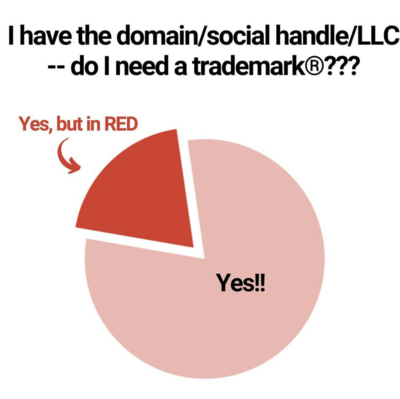
[00:34:43] Hala Taha: Yeah. And friends that, that talk about starting businesses all the time. And they’re like in, and this is such a great conversation for you. All they care about is the trademark. And I’m like have you sold any of the product? I’ve tried it with a different name. That’s not so difficult. Like, why are you so stuck on this one name? And you’re going to, you’re pouring all this money for an idea. You don’t even know works. You don’t even know. How the business works and you haven’t even studied the landscape of the business and even how to enter it.
And like, all you’re worried about is the trademark, and so I just feel like it’s so silly. Like some, like the first thing that should come is sales.
[00:35:17] Brittany Ratelle: Absolutely.
[00:35:18] Hala Taha: There’s no business with no sales. And so I always say if you can’t get three to five people in your current network to buy what you want to do, and services to me are like the easiest thing to do right now, especially in this world that we’re in. If you can’t get three to five people to buy your service, then you don’t have product market fit most likely. And you need to go back to the drawing board and have a different idea and see if you can get three to five people to buy it before you go investing too much and going too far down the path.
That way — it’s a very downstream experience. And also back to your point of community, if you’ve built this community, you have this built in audience that you can start to sell to in DM. And like a lot of these sales happen in the DMs.
[00:35:58] Brittany Ratelle: And, having a clear call to action and making sure that’s included with every piece of media that you have out. Are you making it very clear what you want your audience member to do? Where are they supposed to go next on their customer map?
[00:36:09] Hala Taha: Yeah, 100%. It’s being super clear, making sure that all of your links are working in, like I said, Talking to them in the DMS, putting out some sort of educational teaser about your product, something that’s free. The best advice that I ever got is put out your best stuff for free.
Such good advice, anything that you have a workbook, just information, don’t be scared to give that knowledge away. If you give that knowledge away, people are going to buy from you. And so you always want to give your best stuff away for free. And then the people that are engaging, contact them in the DMS, see how you can help them and have a real conversation.
And it will most likely lead to business. So I would say leverage your posts and your feed for giving your best stuff away.
[00:36:51] Brittany Ratelle: I think that’s great advice. You mentioned, especially, I’m sure you like me we talk to a lot of business owners or people who are maybe doing something and want to start that side hustle.
And a lot of times people do have that fear of if I start posting this or getting this out there, people are going to steal my idea. They’re going to rip me off. And it’s a legitimate fear and it keeps a lot of people from taking action. I have my perspective about like how appropriate it is to worry about that stuff, but I’d love to hear what, lessons or what advice you’ve given to people about getting started and getting that action underneath their feet.
[00:37:22] Hala Taha: I would say that you’ve really gotta just focus on yourself. That’s a very scarcity mindset. You need to have a mindset of abundance. You need to believe that there’s enough pie in this sky for everyone. Actually your competitors can be your best collaborators. One of the best things that I did when I was up and coming on LinkedIn, I was a very big podcaster from the start because not many people were doing it, so I stood out, but there was other like up and coming podcasters, like Mark Metry and Jordan Paris and all these other podcasters bubbling up. I could have been like, oh, they’re my “competitors.” And I don’t want to be friends with them and I don’t want to, but instead I decided that I would be the leader of everyone and that I would be the glue that kept all of these LinkedIn podcasters together. And so, I reached out to them one by one and be like, “Hey, like I noticed, you’re doing your thing. I really respect it. Join this WhatsApp group, let’s support each other’s links, let’s have a monthly mastermind, hop on a call, share strategies, share secrets.” And then next thing I know what I’m learning from all these people. And I like elevated above them because I was so respected for being the glue that held everybody together.
And then I became like a podcast influencer within the podcast space. There’s nothing more powerful than being an industry leader in your niche, because then you start to have meaningful conversations. You start to make the right connections. You start learning things from all these other podcasters people who like, for example, my mentor is Jordan Harbinger, he’s one of the biggest podcasters in the world. He’s taught me so much.
But, he only took me on as his mentee because I was crushing it and learning as much as I could and doing as much as I could. And, I could teach him a few things too. He looked at me not as competition and like collaborator as well. Open your mind and to your original question of ” I’m scared, people are going to steal my ideas. I’m scared to give away too much.” You’ve gotta let all that go. You’re going to have more ideas. There’s going to be more to come. And if you really want to start a business, you’ve got to be thought as the main person, the go-to person for that topic. And, if you don’t put yourself out there, no one’s going to ever know.
I feel like everybody should have a personal brand right now. There’s really no excuse. And I understand that some people are more shy, some people are more reserved, but there’s lots of creative ways to get your stuff out there that doesn’t necessarily need to have your face behind it. I think the biggest deterrent is people are worried about what their friends and family are going to think I think a lot of the times.
[00:39:39] Brittany Ratelle: I think you hit the nail in the head right there, because I, I hear people who couch their excuses or just their hesitation that they have in other language, but what they’re really worried is that people closest to them or what the people from high school are going to say on Facebook or something. And you’re like, are they even your target audience, (A) to care about that and (B) — those thoughts are not your thoughts and they might not be true. And they’re probably a hundred percent about what they did or haven’t done in their life and not about you.
[00:40:04] Hala Taha: Yeah. I think that anybody who looks down at somebody for trying is a complete loser, right? And any losers like that you don’t even want in your circle. So, you only want people who are bringing you up and proud of you for trying. The first step is to try and to put yourself out there and to start experimenting and start just releasing your knowledge in the world. And you’d be surprised most people are going to support you.
And, you’re going to have to look for support outside the people that, especially at first, I have to say that is 100% true, but go find other people in your niche. I just told the podcaster story. It’s a great example. Go find other, if you’re a mommy blogger, go find other mommy bloggers who are going to support you.
If you’re in law, go find other people who are putting themselves out there who are also on social, talking about law and team up together, start an engagement pod where you guys support each other’s links, start a monthly call, get to know each other, have dinner, start some dinner parties. And then, you have this support system and you learn from them.
And hopefully, you guys just level up even faster. Like it’s so much faster to learn from each other, rather than try to do it on your own.
[00:41:07] Brittany Ratelle: Right to stay in your silo, because you’re likely all trying to work through the very similar problems, all without sharing any of your notes.
[00:41:14] Hala Taha: Exactly. And then you guys can make intros and it’s just such a way better mentality to have. I feel like all the podcasters that I know that just try to do it on their own and feel very competitive. They’re going nowhere. Be collaborative.
[00:41:25] Brittany Ratelle: I think that’s great advice. And like you said, it comes down to that mindset of abundance versus scarcity. So trust that you’ve got your back– universe has got your back, there’s more great ideas where they’ve coming from. I think that’s a, that’s an awesome idea.
So in terms of the podcasting, if people are. On that road and they started a podcast and, or maybe even gotten some success, I’ve had clients who’ve gotten to that decision point where they have been asked to maybe join a network or to stay solo.
What would be your advice of maybe the pros and cons of being there? Of what does it look like to stay going at your own way and maybe what could be some of the benefits of joining a network?
[00:41:58] Hala Taha: Yeah, that’s a great question. In terms of independence, what you really have is like flexibility. And you don’t have any of the concerns that you’re going to sign exclusive to someone. Usually what that means is that they have the exclusive right to sell your show. And oftentimes, like the deal that I just signed, they’re going to sell all my properties on my social, my YouTube and my podcast. They have the exclusive, and they get, 20 to 30% of everything. If the partner doesn’t hold up their end of the deal and doesn’t sell for you– that’s a big risk, right? So they’re not filling up your inventory. They’re not doing their job as a sales team. And so you want to make sure that you really, I would test the partner first before you sign an exclusive deal and see if they’re like really filling up your pipeline.
I stayed independent for so long because I was sold out working with all these six different partners. And, I didn’t feel like I had a partner that could sell out as effectively as us and I also wanted the creativity to sell 360 social media campaigns, and most networks don’t have that capability.
And they’re not like as advanced as we are. I just signed with the network that is very interested in that and wants me to consult them how to do that. So I was very interested in the fact that they were bullish about YouTube and social.
You knew they could keep up. It’s like finding the partner that like will have include you in the discussions will make sure that your voice is heard.
And then the other risk is a lot of these networks promise to grow your show and they don’t, growing your show is 100%. Even I know that signing with such a big company, they’re probably not it’s still going to be on me to grow my show and I’m fully aware of that. So those are the biggest, like concerns that I have for most podcasters.
I think I’m a very unique situation. I don’t think most podcasters have a podcast agency in a network and a team of 60. And so I was able to manage six different partnerships because I have an ad ops team. I have four people who work on just ad ops for all my shows. And so if you have a small team of maybe three people. Then you probably in just one show, you probably could be independent and just work through all these different ad agencies. But if you’re just one person go with a network, evaluate them, test them first. And then, if they’re selling, if they’re doing a good job selling, just go for it because it’s pretty hard to scale that yourself.
[00:44:07] Brittany Ratelle: And to have some of those economies of scale, in the network and the relationships. That’s a great Pro/Con of something to weigh. And that takes it out of the realm because I think similar to when people are asked to maybe sign on with an agent, or I see this even sometimes in book deal offers of not just being flattered by it, because it can be like a great ego boost of oh, I’m signed with someone and that’s awesome, but you also need to think about what’s the trade off, and does this make sense for what I want to do with my business?
[00:44:33] Hala Taha: Yeah. I was approached so many times previously and I always said no to the deals because I was like you’re selling my show now what’s preventing you from selling out now. I don’t understand. So if I sign with you, then I’m expecting, 30% inventory sell through because that’s all you’ve been doing now.
So again, like test. Right, make sure that you’re with the right partner. And if you’re not, sign up to many partners and get a VA, that’s going to help you run the ad ops and flight your campaigns.
[00:44:59] Brittany Ratelle: And get everything, talking to each other and get you in the good spot. You want to make sure that the stuff that people, they’re getting credit, but just for what they’re bringing home to the cave, not for the stuff that you’re doing on your own.
Yeah. Yeah. I totally agree. Awesome. I’ve just loved having this conversation Hala, but in terms of, if people want to hear more about you, especially more about what you do personally on your show and also about the great work that your agency is doing, where should they further connect? Where would you direct people to go?
[00:45:24] Hala Taha: Oh, thank you so much, Brittany. I would say, first of all, please listen to young and profiting podcast. Don’t be fooled by the name it’s for. All ages. I’ve interviewed people like Matthew McConaughey. Dave Asprey, Seth Godin, Robert Green. We talk about human behavior is a huge topic, entrepreneurship, sales, negotiation, all these cool topics and it’s Young and Profiting. You can find it on every major podcast app. I’d love for you guys to take a listen to the show. YAP Media, you can go to YAPmedia.io for all of our services. We are the number one LinkedIn marketing agency. We were just voted best podcast agency of 2022 and fastest growing podcast agency of 2022.
[00:46:04] Brittany Ratelle: That’s awesome.
[00:46:05] Hala Taha: Yeah, it’s pretty cool. So, if you guys want to lot to show, if you want to launch your LinkedIn or Instagram or YouTube you can definitely reach out to us at YAPMedia.io .
[00:46:14] Brittany Ratelle: For sure, especially those listeners that are personal brands that are coaches and authors, or there’s a lot of other people too, who are hybrid or looking to have support and help. You should definitely obviously be following Halla and watching what she’s doing, watching what her team’s doing, because it’s very clear. They know what they’re doing and they’re trying to look forward and see those opportunities before even a lot of the rest of us, people can catch up.
[00:46:35] Hala Taha: Thank you so much. And for those of you who don’t know, Brittany does all of my legal stuff. When it comes to our trademarks, I think you helped me trademark YAP Media network and young,
[00:46:46] Brittany Ratelle: –it did, and Young and P rofiting– and I have helped on some of your contract reviews. For some of your stuff. I’ve been happy to be partner with your company and to be with someone who’s doing such cool stuff in the podcasting in industry.
[00:46:58] Hala Taha: And to go back to a lesson that we mentioned before, I did not trademark my name until like years later, because it doesn’t. Not that it doesn’t matter, but like other things need to happen first, right? Before you invest into something like that.
[00:47:13] Brittany Ratelle: When you know that you love your name, it means something to you. You’d be heartbroken if other someone else took it or you got that cease and desist, that’s when you know, but always remember it’s the symbol for the thing — it’s not the thing, it’s not what you’re selling. It’s just a shorthand way for people to find you.
Hala Taha: Thank you so much, Brittany!